

Nieuws


0 reacties

41x viewed
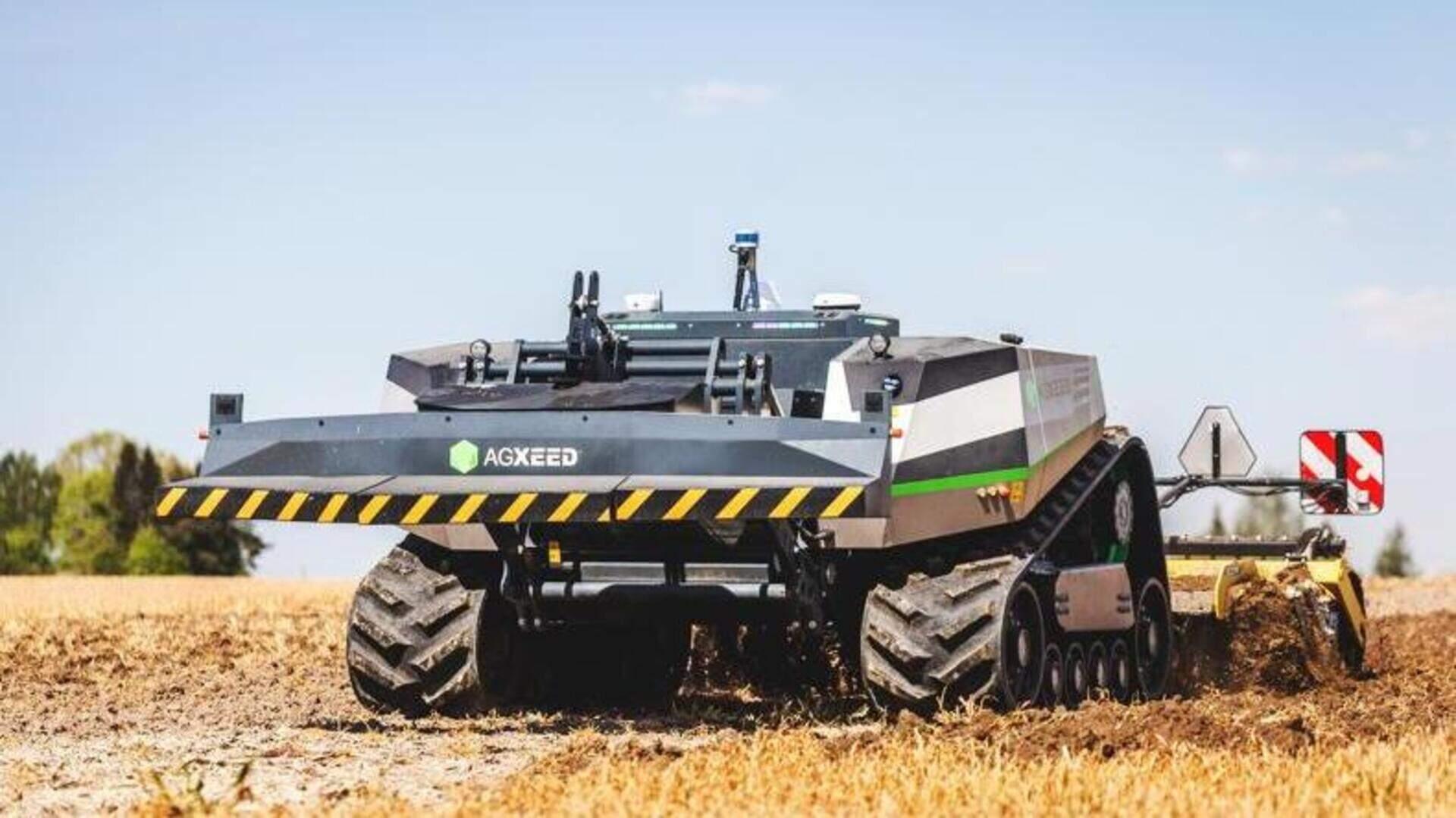
Robot tractors from Limburg are advancing in Europe. In the Netherlands, Germany, France, Switzerland, Austria and Denmark, AgXeed machines are now running in fields. Concrete numbers are not disclosed by the company. Production is being scaled up step by step. With that, this technology seems to be gaining ground in practice faster than self-driving cars on the road.
© AgXeed
Breakthrough in practice
In the Grubbenvorst office, ceo Joris Hiddema follows several robots simultaneously on a big screen. On the screen, a robot slides across a German field. Hiddema watches remotely. "I can monitor customers in real time and often resolve faults remotely," he says. According to Hiddema, the technology is still often underestimated. "People think this is easier than a self-driving car. But the opposite is true. It is not just about driving, but about very precise operations: seeding, fertilising, ploughing, each time with different implements and settings."
Complexer than thought
The machines work with task maps based on soil data and previous harvests, which are further filled in by customers via questionnaires about the desired operations. Sensors then continuously adjust the process. "A human can make mistakes, for example by engaging a tool at the wrong time. That can cause damage. These machines help reduce that chance." It is precisely the combination of tasks that makes the system complex: one robot can control several implements, for example ploughing and seeding or ploughing and fertilising in one pass. The attached machines continuously react to each other and to conditions in the field. The robot continuously adjusts speed, depth and dosage to ensure that each operation is as precise as possible. This makes it broadly applicable: from ploughing and seeding to precision fertilisation and laser weeding.
More sustainable work in the field
The robot tractor is more sustainable than traditional machines, according to the company. Because it lacks a cab, the machine is lighter and the soil is less pressed down. This benefits crops, which need air and water to root properly. In addition, the precision enables more targeted application of fertilisers and other inputs. "The technology helps farmers to work more precisely and sustainably," says Hiddema.
Answer to labour shortage
The rise of the robotic tractor comes at a time when agriculture is facing staff shortages. "We are not replacing people, we are filling a gap that is already there," says Hiddema. "There are jobs that would otherwise remain." The machines can operate independently for long periods and require less maintenance than traditional tractors, according to the company. Priced at two to three tonnes, they are more expensive to buy, but through continuous use and precision work, the company says this can be recouped. The company currently builds the machines largely by hand, about one per day. With further growth, upscaling is the obvious choice. The breakthrough is therefore not on the road, but on the land, where autonomous technology is showing itself more and more emphatically in practice.
Source: Ondernemen in Limburg