

Praktijkverhalen


0 reacties

2x viewed
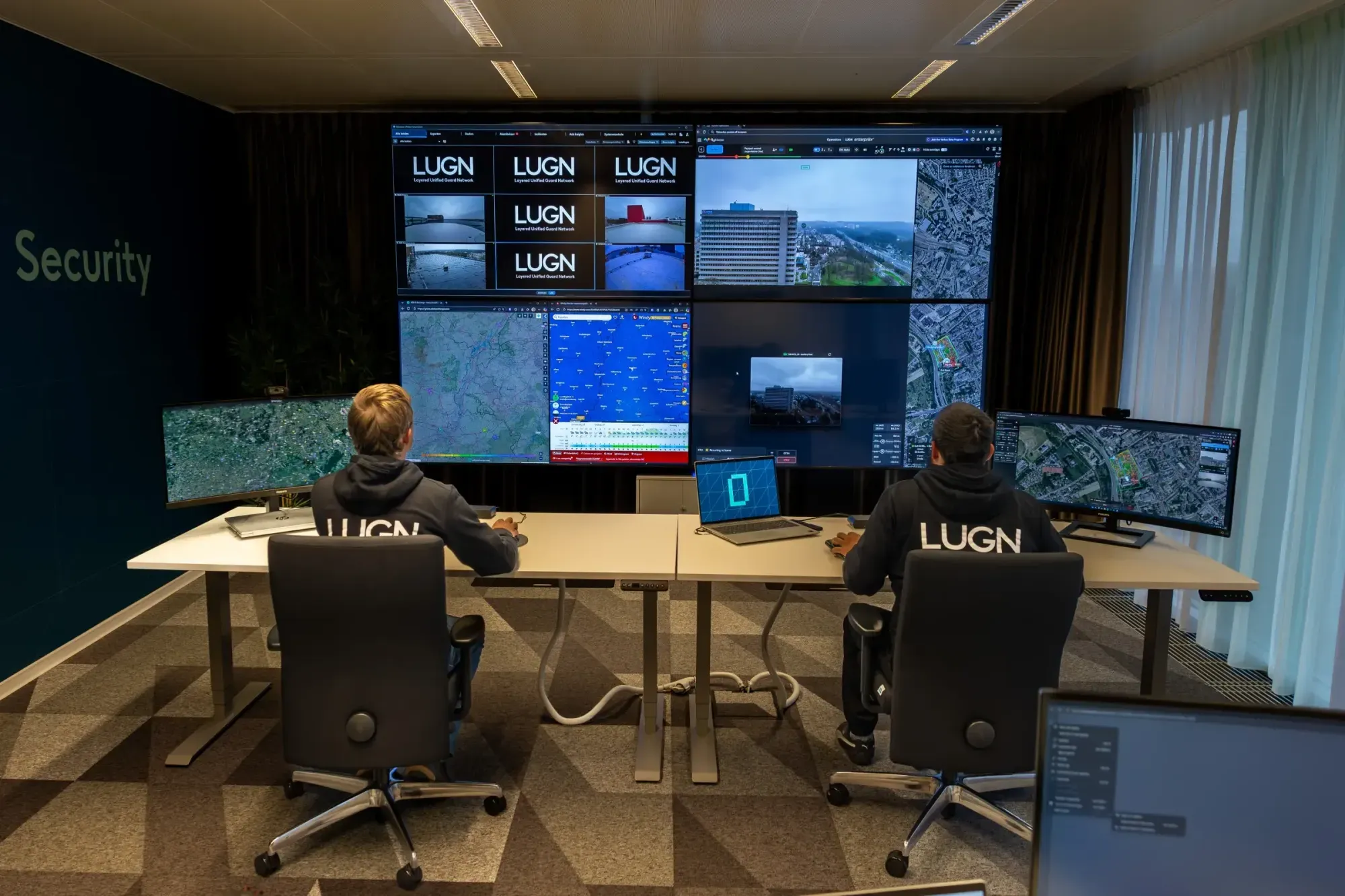
What if a drone is already hovering over an incident, even before someone is physically at the scene? LUGN Security, an innovative company from Heerlen, is building a new way of security from a new 24/7 Drone Control Centre at the Brightlands Smart Services Campus: faster, smarter and from the air!
Quick action
The security sector is under great pressure. Incidents are developing faster and faster, while staff availability is decreasing. The biggest enemy in security, according to Alex Hermans, co-owner of LUGN Security, is time.
'When a report is made, it soon takes 15 minutes for a surveillant to arrive on the scene. By that time, the incident is often over. We don't want to act only after the damage has already occurred. We want to get ahead of incidents and deploy scarce resources in a targeted way, exactly where they are needed.'
LUGN Security does just that with the deployment of drones. Instead of exclusively deploying security guards with cars, they control security drones remotely. The drones are in docking stations at various customer locations. From the control centre in Heerlen, they are remotely piloted by certified pilots according to strict aviation regulations.
'Our people do not have to answer phones, handle reports or monitor dozens of screens at the same time. They are fully focused on one task: the flight and the images. As a result, the quality of observation is much higher than in a traditional control room.'
Safe and efficient
After an incident, the drone automatically takes off and flies to the location within two minutes. The live images go to the control room, where the pilots assess the situation in real time. 'You have instant visibility and that changes everything,' says Alex. 'You create an aerial view even before a security guard has a chance to physically move. That makes operations not only faster, but also safer, more efficient and information-driven.'
Drones can also, for example, conduct patrols independently and spot anomalies: an open gate, a vehicle in the wrong place or unusual movements. In some cases, they can even address or follow people. The effect: less repetitive work for security guards and more room for situations where human insight is really needed. 'The drone does not replace the security guard. We make him or her more effective, exactly where it matters.'
Security as a service
Backstage, everything revolves around an integrated platform. LUGN provides security as a service, with drones on location and control from the Control Centre in Heerlen. Organisations pay only for the actual flight minutes. 'Just like a taxi meter: the counter runs during the flight and then stops. Our customers do not have to make complex hardware investments and are not responsible for aviation technology or compliance themselves. We take over that piece completely.'
Choice of Brightlands
Choosing the Brightlands Smart Services Campus as a base of operations is no accident, according to Alex. For a company operating at the intersection of aerospace, data and AI, the environment is crucial. 'The campus houses all the disciplines we need: software, aerospace engineering, data science and AI, as well as knowledge institutions and development partners. This combination not only accelerates innovation, but also helps to properly address complex issues such as privacy, data use and regulation. Brightlands also attracts interns, students and international partners, ensuring a constant influx of new expertise and fresh technical perspectives. For us, the campus is much more than just a workplace. It is an environment where our operation, our innovation and our social responsibility come together.'
New standard in security
LUGN, meanwhile, is working on further scaling up, including across the border. The first steps towards Germany have now been taken. According to Alex, the direction is clear: security is becoming faster, smarter and less and less dependent on physical presence. According to him, the drone is not just a tool: it is the next step in the evolution of security. 'In industry, automation has been normal for more than a hundred years. In security it is almost not yet, while staff shortages are huge. You do not solve these by employing more people, but by making the people who are there more effective. Drones are a logical step in this. By deploying technology well, we create more overview, more peace and ultimately more safety.'
Limburg as drone hub
For the future, Alex sees plenty of opportunities, especially from the region. 'How great would it be if Limburg develops into an international drone hub? A place where flying on, around and over the border is organised and licensed together. However, that is where the region has a directorial role to play.'