

Nieuws


0 reacties

9x viewed
Bacteria, fungi and yeasts have the potential to make agriculture more sustainable and the economy more circular. A new public-private partnership is set to put this into practice. ‘Microbiomes can help solve the nitrogen problem, the decline in biodiversity and poor water quality.’
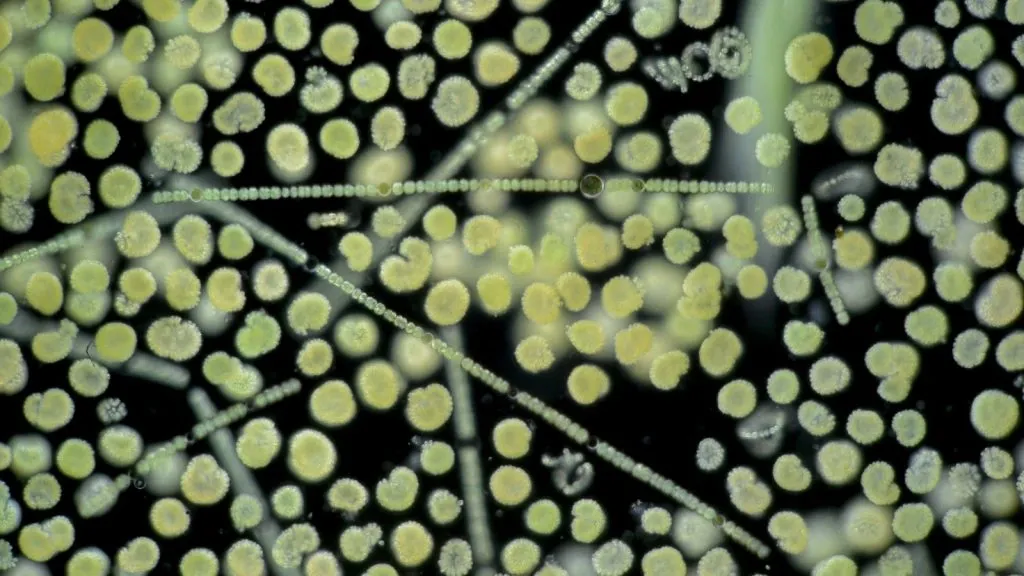
Microbiomes are communities of microorganisms, such as fungi, bacteria and yeasts. | Credits: Holomicrobiome Institute
When we think of fungi, bacteria and viruses, we tend to think of diseases and spoiled food. Micro-organisms do not have the best reputation, as Professor of Systems Biology Bas Teusink is well aware. The Holomicrobiome Institute, which opened last Wednesday and of which Teusink is the scientific director, aims to change that. ‘Micro-organisms are indispensable for sustainable agriculture and the circular economy.’
Microbiomes as a solution to the nitrogen problem
The Holomicrobiome Institute is not a knowledge institute, but an innovation institute, says Teusink. For although there are still considerable gaps in our knowledge – which researchers from Dutch universities and universities of applied sciences now wish to fill together – the main question is how we can use microbiomes to make the world and humanity healthier.
Microbiomes are communities of micro-organisms, such as fungi, bacteria and yeasts. These are indispensable for soil, water, plants, animals and humans. Take agricultural land, explains Teusink. Crops enter into a kind of partnership with fungi in the soil. The plant provides the fungi with nutrients in the form of sugars; in return, the fungi extract nitrogen and phosphate from the soil and pass them on to the plant.
We have disrupted that balance by supplying that nitrogen and phosphate to the crops in the form of artificial fertiliser. Crops can then use the sugars to grow instead of giving them to the fungi. Sounds efficient. But, as Teusink emphasises: ‘This depletes the soil. Crops then become more susceptible to fungi and other pathogens, and that in turn requires the use of pesticides. This creates a negative cycle.’
That negative cycle can become a positive one if farmers work more closely with the microbiomes in their soil. Teusink: ‘That can help solve many of the major problems we currently face, such as the nitrogen problem, the decline in biodiversity and poor water quality.’ It is not artificial fertiliser, but micro-organisms that make plants more resilient and nutritious. Years ago , scientists in Utrecht that soil microbes have the potential to make plants immune to disease.